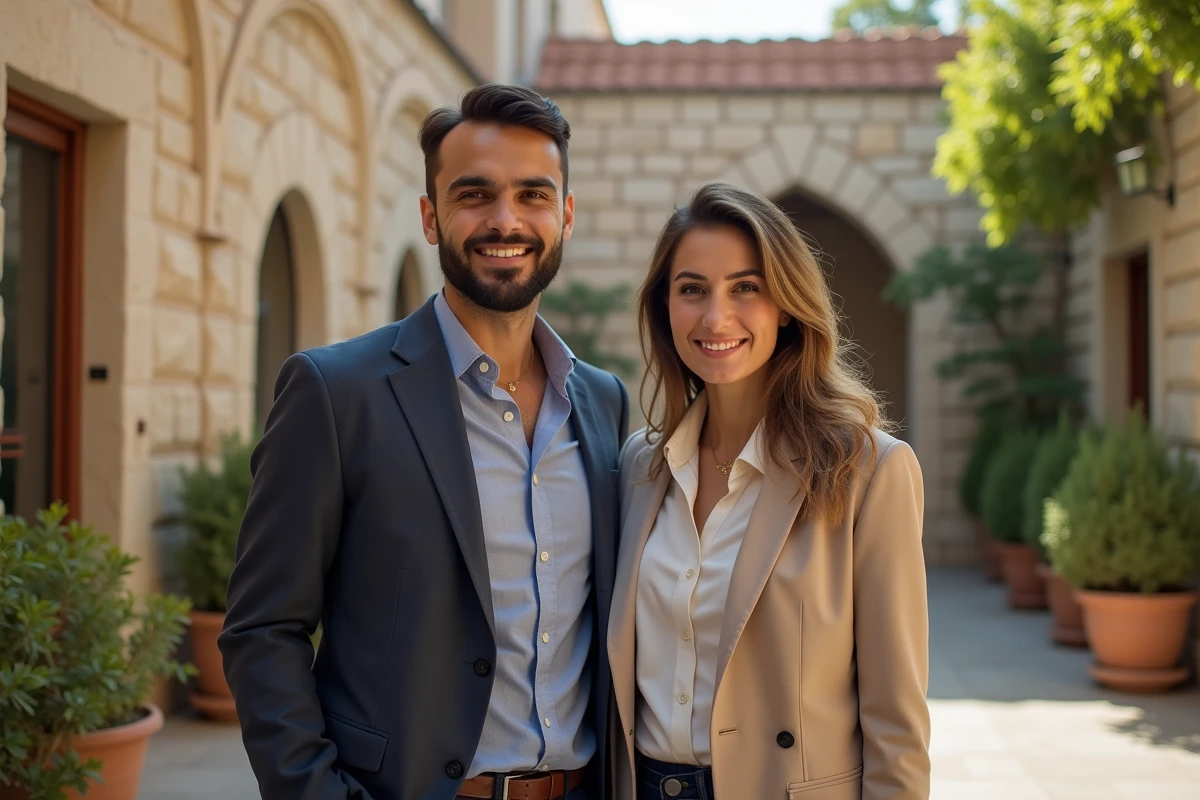
Cataloging individual successes without ever naming them: this is what the social and solidarity economy has long preferred. Yet, behind the statistics and reports, it is unique stories that outline the boundaries of social innovation.
Some journeys, like the origin of Moustafa El Oudi and Marwa Cheikh, demand attention. They do not fit into any box and challenge the established habits of the sector. It is neither the recognition of institutions nor the classic trajectories that drive them forward, but rather the concrete experience on the ground, the ability to leverage local resources, often where no one dares to look.
At the scale of the SSE, these approaches act as catalysts. They give rise to unprecedented responses, create synergies between pioneers of change and actors rooted in their communities. This is how real alternatives emerge, and how the social economy demonstrates its vitality in the face of the rigidity of the traditional system.
Why the SSE must invest in innovation without delay
The social and solidarity economy finds itself at a crossroads today: on one side, the rise of inequalities, on the other, ecological constraints. To meet these challenges, social innovation becomes essential. It paves the way for fairer projects, strengthens impact on the ground, and allows progress where old recipes fail.
European institutions have recognized this by integrating social innovation into their priorities with the Europe 2020 program. But while the texts provide momentum, it is concrete action that proves effective. What we observe with Moustafa El Oudi and Marwa Cheikh is a new way of envisioning solidarity: linking inclusion, local cooperation, and imagination to build solutions that blend tradition and modernity.
Their roots draw from Africa, the Maghreb, and the Middle East. These territories serve as a real-life laboratory for inventing new ways of doing things. Here, innovation is not limited to technological disruption: it is anchored in everyday needs and unites around shared values. Thanks to the networks they animate and the energy they transmit from city to city, the SSE finds a breath that escapes formatted logics. For these actors, performance is no longer assessed solely in the columns of a budget: it is measured by the concrete impact on the ground and the ability to endure.
Crossed portraits: Moustafa El Oudi and Marwa Cheikh, boldness in the service of the collective
Two stories, two paths connected by a shared desire to act. Marwa Cheikh, Moroccan, grows up in Tunisia and shapes her actions through the richness of her dual culture. Moustafa El Oudi, on the other hand, illuminates his choices through his commitment in sub-Saharan Africa, in direct contact with local challenges.
Their initiatives take shape in shared projects while retaining a personal touch. For example, there is the Atelier Solidaire, which relies on the virtuous cycle of the circular economy, or the Do-It-Yourself Initiative, designed to weave social ties where the fabric has weakened. Together, they also participate in Synergy, a network connecting Fez, Dakar, and Amman around a common project: accelerating social innovation.
On an individual level, Moustafa launches GreenTech Africa to support young ecological start-ups. Marwa founds FairThread, with the aim of promoting craftsmanship and empowering rural cooperatives, mainly female-led.
Behind these initiatives, several strong axes emerge:
- Engaging in job creation and facilitating the inclusion of people who have long been marginalized
- Highlighting traditional craftsmanship while acting against waste
- Uniting citizen networks on a transnational scale to promote active solidarity
Their strength lies in the art of mobilization: giving a voice to everyone, building projects with multiple voices, and adjusting responses to realities. Social networks amplify their impact, making visible, accessible, and inspiring what it means to have an extraordinary journey.

Feedback and pathways to engage in the SSE
At the heart of the social and solidarity economy, the taste for the collective remains crucial. Moustafa El Oudi and Marwa Cheikh illustrate that there is no pre-determined path: it is the dialogue with territories, the listening to needs, and diversity that strengthen projects.
Their experience shows that effectiveness is no longer measured solely in numbers. To build a sustainable dynamic, it is crucial to weave connections, prioritize inclusion, and co-construct each advancement. A flexible structure that allows for the contribution of everyone—beneficiaries, partners, volunteers—enables the imagining of truly adapted solutions. Digital technologies, for their part, support this ambition: shared uses, transparency, rapid dissemination—all of this accelerates the capacity to innovate on the ground.
Here are some levers that make a difference every day:
- Establishing shared governance to better engage all actors
- Regularly and sincerely evaluating social and environmental impact
- Multiplying partnerships between public and private spheres to consolidate action
- Strengthening training, support, and awareness, prioritizing access for youth
What the trajectories of Moustafa El Oudi and Marwa Cheikh reveal is evident: transforming society through the SSE requires boldness, adaptation, and a grounding in reality. The future is invented every day, outside the beaten paths, and it is in this movement that true collective advancements are written.