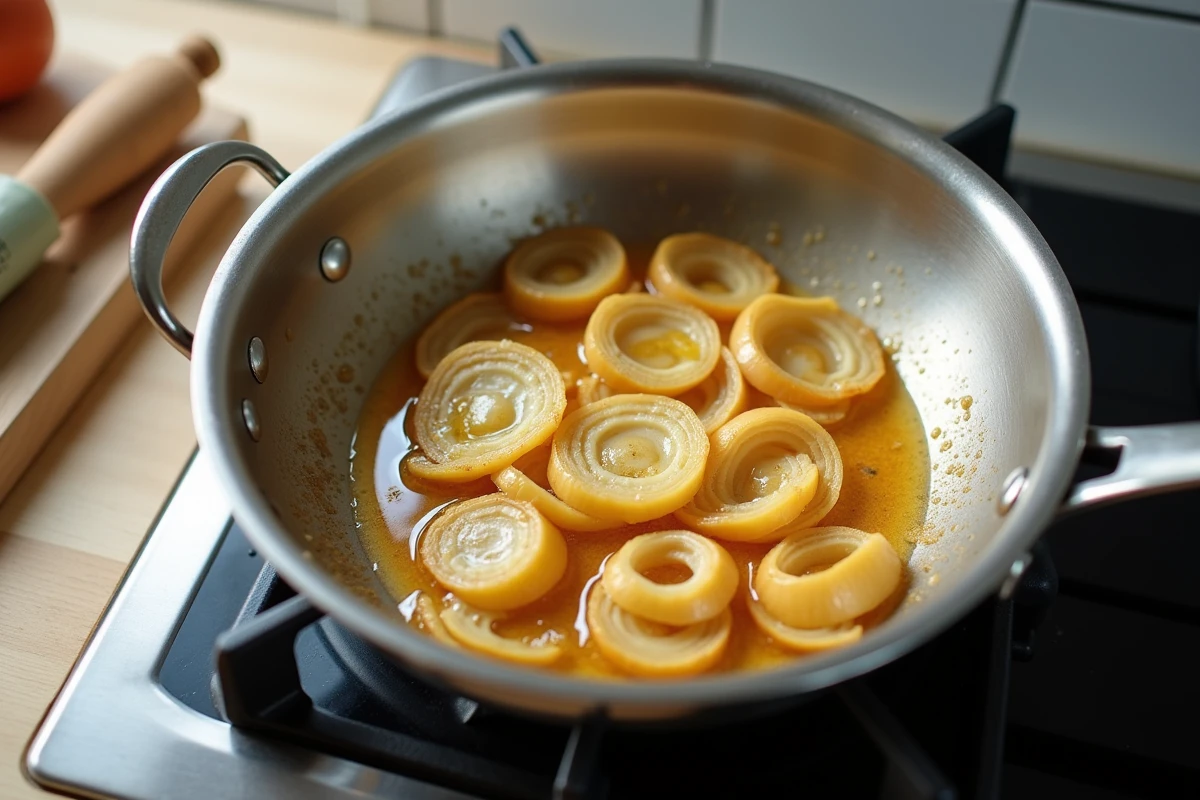
Sauté onions without fat may seem counterintuitive. Oil or butter usually serve as a thermal conductor between the pan and the vegetable. Without this greasy film, the onion sticks, burns, or remains raw in the center. The good news: a few simple techniques can help bypass the problem, provided you understand what is actually happening in the pan.
Why onions stick without oil and how to remedy it
The onion contains natural sugars. These sugars melt and caramelize when heated. Without fat to distribute the temperature, they concentrate at the point of contact with the metal and carbonize.
Water changes the game. By adding a small amount of water to a hot non-stick pan, you create a thin layer of steam between the onion and the surface. Water replaces the thermal conductor role of oil until the onion releases its own juice.
Have you noticed that finely sliced onions release liquid much faster than onions cut into large pieces? That’s the key. The finer the cut, the more the cells are opened, and the quicker the juice comes out. This juice takes over from the water added at the start and prevents sticking. A detailed guide explains how to sauté onions without fat by following exactly this progressive logic.

Adapting the cut of the onion for fat-free cooking
In classical cooking, the size of the cut mainly depends on the desired visual result. Without fat, it becomes a full-fledged technical lever.
Very thin slices for an express confit
Slices no thicker than two millimeters release their water in just a few minutes. They soften quickly and reach a melting stage without needing a long time in the pan. This is the most suitable format to achieve an onion confit without any fat.
Medium dice for a simple melting
Diced onions about one centimeter are suitable when you want to retain some texture. The cooking time is longer, and you need to add water more frequently, in small amounts. The result: a translucent, slightly sweet onion, perfect as a base for sauce or soup.
Avoid large wedges. Without fat, their contact surface is too small compared to their volume. The center remains raw while the outside burns.
Fat-free cooking in a non-stick pan: step-by-step
Here is the method that yields the most consistent results, regardless of the recipe.
- High heat at the start: heat the non-stick pan, add the sliced onions and two tablespoons of water. Stir for one to two minutes to start the cooking process.
- Lower the heat as soon as the water evaporates: the onions begin to release their own juice. Switch to medium-low heat to prevent the sugars from burning.
- Add water in small amounts (one tablespoon at a time) whenever the bottom of the pan becomes dry. This gradual addition replaces the buffering role of oil.
- Continue until the desired texture is reached. For a simple melting, a few minutes are sufficient. For a confit, allow for a longer cooking time over low heat.
- At the end of cooking, a splash of vinegar (balsamic or cider) enhances caramelization and adds acidity without adding calories.
This technique also works with shallots. Their sugar content is comparable, and they respond the same way to the gradual addition of water.
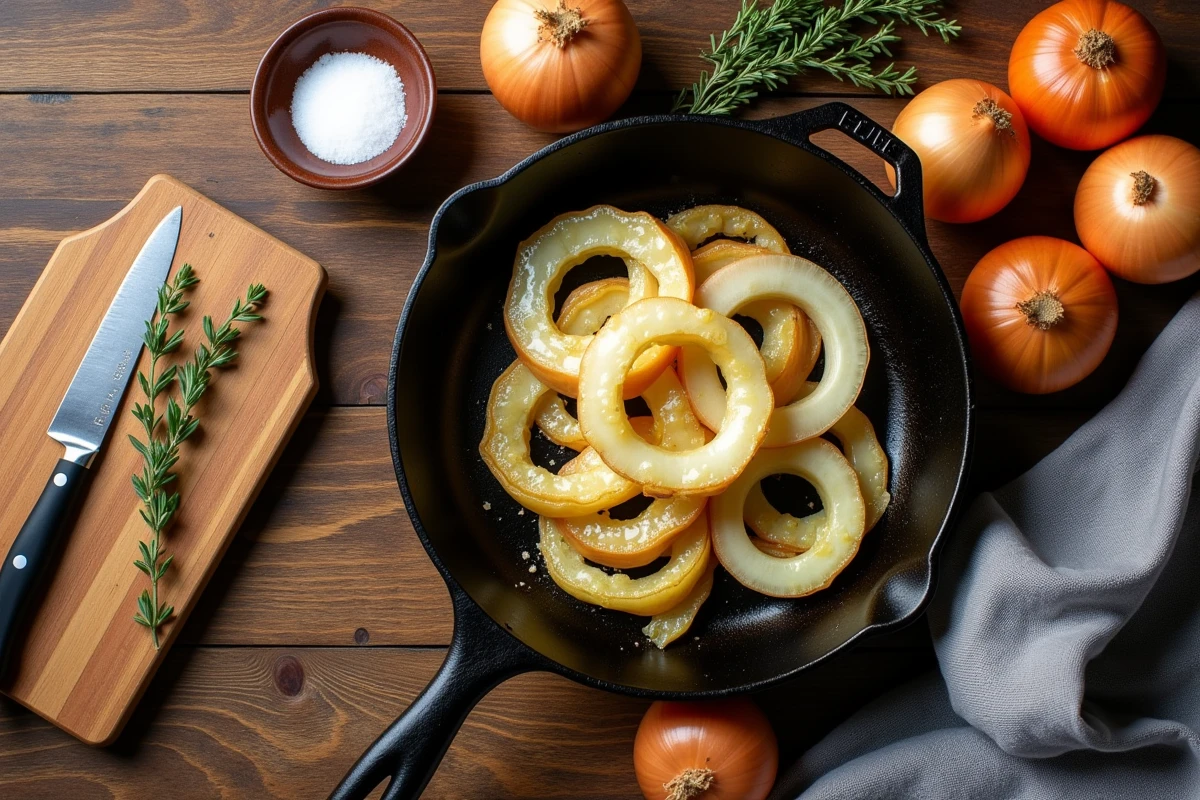
Fat-free onions and long cooking: the zero-oil confit
Traditional onion confit relies on slow cooking in butter or olive oil. Achieving a similar result without any fat requires a slightly different approach.
The principle remains the same: transform the sugars in the onion through gentle, prolonged heat. The difference is that water replaces fat as the cooking medium. Very thin slicing is non-negotiable here, as it compensates for the absence of fat by accelerating the release of juice.
At the end of cooking, when the onions are golden and melting, you can add a small amount of sweetener (half a teaspoon of honey, for example) to intensify caramelization. Adding vinegar right after creates a sweet-sour contrast very close to classic confit.
Salt should be added during cooking, not at the beginning. Salting too early causes water to be released all at once. The onion then bathes in excess liquid and simmers instead of caramelizing. Add salt once the onions have started to color.
Recipes suitable for fat-free sautéed onions
This technique is not limited to low-calorie diets. It fits into everyday recipes where onion serves as an aromatic base.
- Konjac dishes (noodles or rice) gain flavor when you add sautéed onion with water instead of raw onion. The slight sweetness of the cooked onion compensates for the neutrality of konjac.
- Homemade tomato sauces often start with an onion sautéed in oil. Replacing oil with water does not alter the final taste of the sauce, as the tomato then provides enough body and acidity.
- Grilled vegetable garnishes (peppers, zucchini) can be complemented with fat-free confit onions, added at the end of cooking for an extra touch of sweetness.
The absence of fat also has a often-overlooked advantage: onions no longer mask the taste of other ingredients. Without the lipid film coating the mouth, the vegetable flavors stand out more clearly.
Equipment matters as much as technique. A non-stick pan in good condition is the minimum requirement. A damaged, scratched, or peeling coating negates the entire purpose of the method, as the onion will stick no matter what you do. Check the condition of your pan before you start.