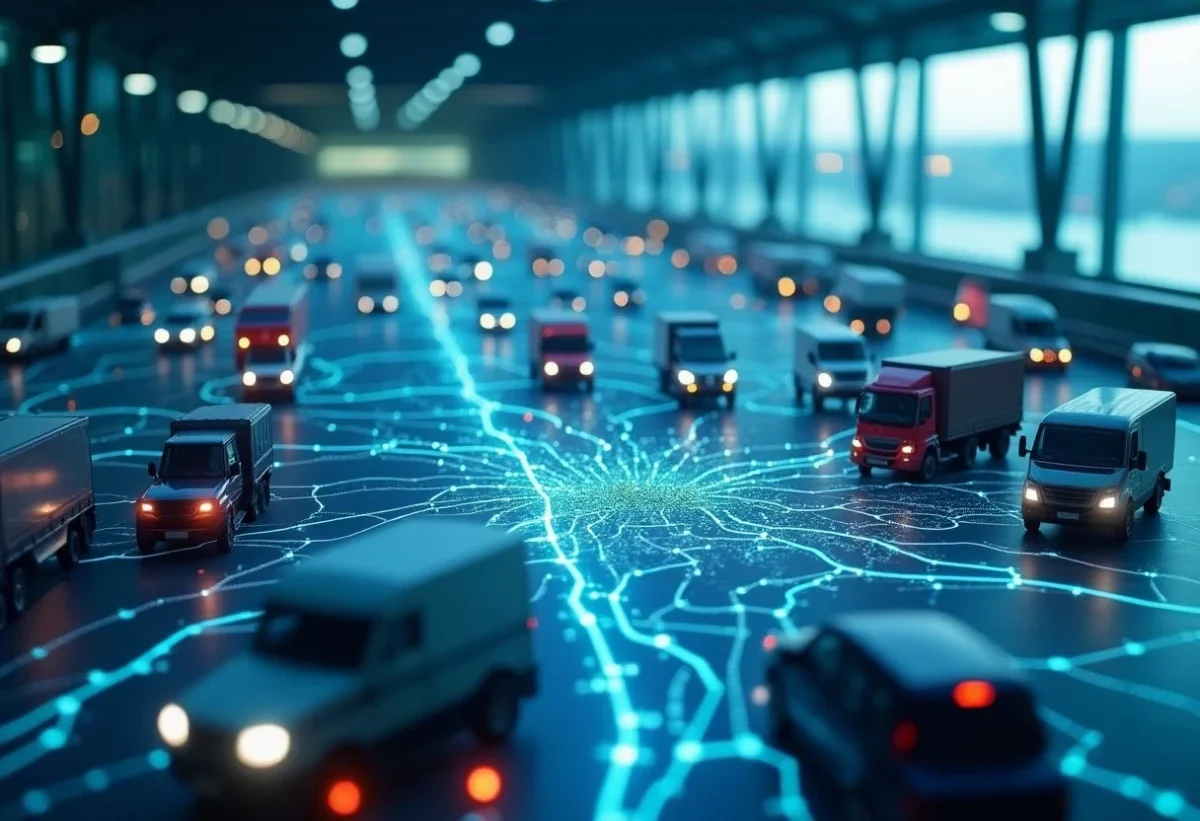
In a constantly evolving world where efficiency and profitability are paramount, fleet management has become a key element for companies looking to optimize their logistics. Fleet tracking is a revolutionary tool that allows managers to supervise and manage their vehicles more effectively. Thanks to advanced technologies, this system increases productivity, reduces operational costs, and improves customer satisfaction. As the industry continues to transform, adopting these technologies becomes essential to remain competitive in the market.
The Fundamentals of Fleet Tracking
Understanding the basic components of fleet tracking allows for the identification of the advantages and opportunities it offers to modern businesses.
- GPS Technology: At the heart of fleet tracking, GPS enables real-time location of vehicles. This technology provides complete visibility over movements and positions, thus facilitating route planning.
- Vehicle Sensors: These sensors capture vital data on driver behavior, fuel consumption, and vehicle condition, allowing for improved safety and extended vehicle lifespan.
- Fleet Management Software: A powerful software centralizes the collected information, offering an intuitive interface to analyze data and make informed decisions.
- Real-Time Communications: Managers can instantly communicate with drivers, enhancing responsiveness and operational efficiency.
The Benefits of Fleet Tracking
Companies that adopt fleet tracking benefit from a multitude of significant advantages that enhance their daily operations and overall profitability.
First, one of the main advantages lies in optimizing routes, allowing for a reduction in unnecessary kilometers and consequently, substantial fuel savings. This not only reduces costs but also contributes to a lower carbon footprint, which is important in a context where sustainability is becoming a global priority.
Secondly, safety is greatly improved thanks to real-time monitoring of driving behaviors. Managers can identify reckless driving and intervene quickly, reducing the risk of accidents and ensuring the safety of employees and goods.
Finally, increased customer satisfaction is a major benefit. By having real-time visibility on deliveries, companies can provide accurate estimates to customers, thereby improving reliability and loyalty.
The Challenges and Solutions of Fleet Tracking
Implementing fleet tracking presents challenges that companies must overcome to maximize its benefits.
- Technological Integration: Integrating with existing systems can be complex. To overcome this, it is essential to choose a provider that offers compatibility with current systems and strong technical support.
- Employee Training: Implementing new technologies often involves a learning curve. It is crucial to adequately train staff so they can fully leverage the new features.
- Initial Cost: The initial investment can be a barrier. However, long-term savings in operational costs often justify this expense.
- Data Protection: Collecting sensitive data raises privacy concerns. Ensuring that the provider adheres to data security standards is imperative.
The Future Trends of Fleet Tracking
As technology evolves, innovations continue to emerge, promising to further optimize fleet tracking in the coming years.
The development of artificial intelligence plays an increasingly important role. AI allows for the instant analysis of large amounts of data, providing accurate forecasts for preventive vehicle maintenance and proactive incident management. Solutions such as predictive analytics help anticipate breakdowns and optimize maintenance schedules.
Moreover, autonomous vehicles are beginning to enter the realm of fleet tracking. Although still in its infancy, this technology has the potential to revolutionize logistics transport, reducing labor needs while increasing safety and efficiency.
Finally, the increased integration of the Internet of Things (IoT) promises to make vehicles even more connected, providing real-time information on every aspect of the vehicle and its environment.