
AJ Auxerre, a true institution of French football, embodies a rich and unique history. Founded in 1905, this club, rooted in the small Burgundian town of Auxerre, has transcended the boundaries of its modest origins through a spectacular rise. Behind its successes, one name stands out: Guy Roux, the iconic coach who led the team from the honorary division to the elite of French football. AJA, known for its youth talent development, made a mark by winning the French championship in 1996 and regularly participating in European competitions, thus writing unforgettable pages in the grand book of football.
From Foundation to Legend: The Journey of AJ Auxerre
AJ Auxerre, or ‘AJA 1905’, stands as a temporal and symbolic landmark in the world of football. The roots of this mythical football club delve into the Burgundian soil, precisely at 4, Place Saint-Etienne, Auxerre, where Abbé Deschamps decided to found a team that would become much more than a mere participant in local sports contests. Adorned in its blue and white colors and proudly displaying the Maltese Cross, AJ Auxerre quickly distinguished itself by its ability to instill a dynamic of victories and training.
The recognition of AJA cannot be dissociated from the influence of two major figures: Guy Roux and Jean-Claude Hamel. Under the leadership of this iconic coach, from 1961 to 2005, and the presidency of Jean-Claude Hamel, from 1963 to 2009, the club etched its name in history by winning the Coupe de France four times, created in memory of Charles Simon and initiated by the French Football Federation to which AJA affiliated in 1920. The Auxerre training program has risen to the status of a model in the development of young talents while participating honorably in national and European competitions.
AJ Auxerre’s commitment to sport is also reflected in its affiliation with the Bourgogne-Franche-Comté League, ensuring regional representation within French football. The Abbé Deschamps stadium, the stage for AJA’s exploits, perpetuates the memory of its founder and embodies the longevity of a club that, despite the trials of time, continues to evoke admiration and respect. AJA, with its exciting history and values, remains an essential entity in the landscape of French football.
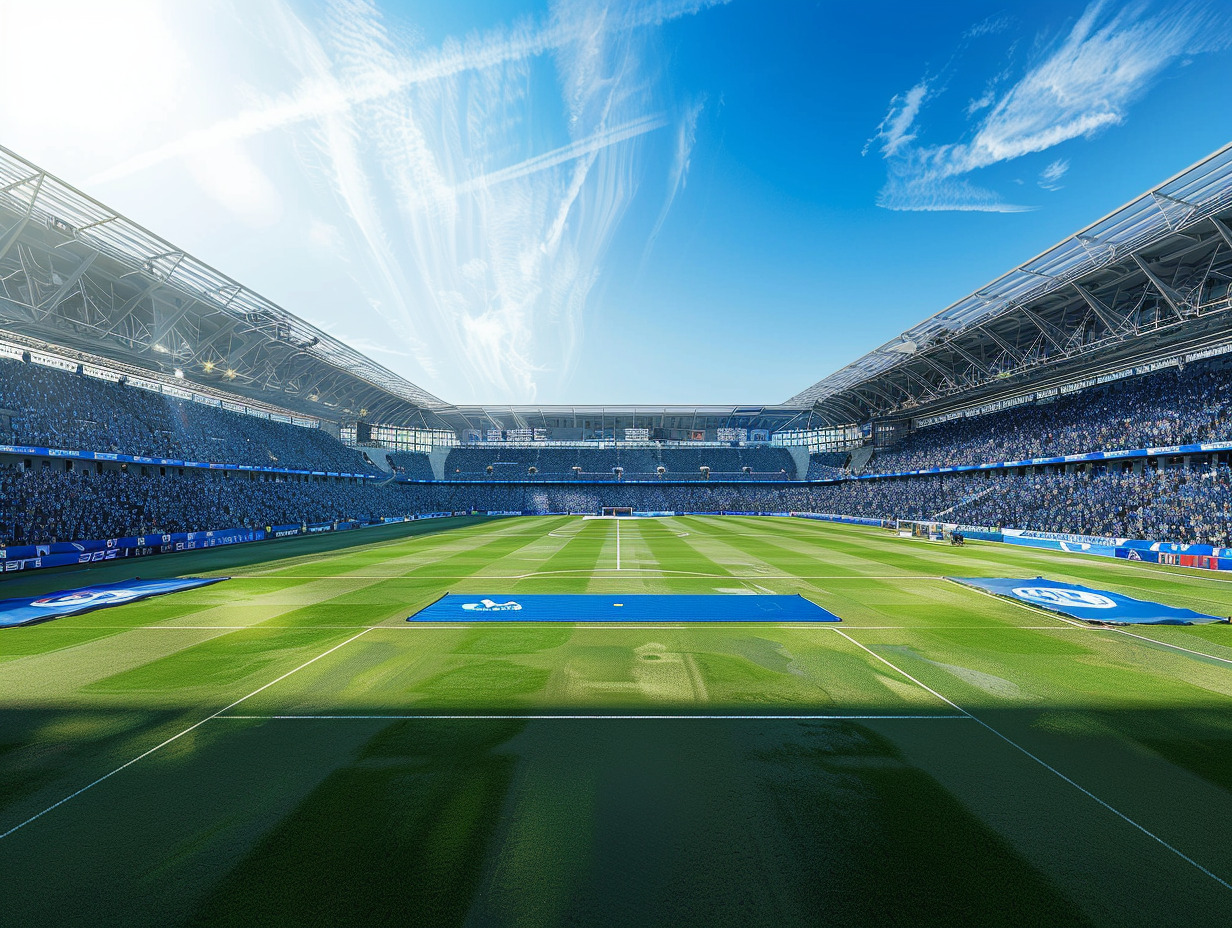
AJ Auxerre in Modern Football: Challenges and Perspectives
In the tumult of modern football, AJ Auxerre, or AJA, faces new challenges in a constantly evolving sports context. The club’s rise to Ligue 1 in 1996, marked by a French championship title, has forged a legacy of success that AJA strives to uphold. Navigating through the divisions, the club confronts the necessity to renew itself to maintain its place at the top of the table and honor its status as a historic competitor.
AJ Auxerre’s participation in the UEFA Cup reflects its European ambition. This international commitment illustrates AJA’s desire to shine beyond French borders, to leave an impression on football enthusiasts, and to exceed expectations by standing out against renowned opponents on the continental stage.
The inauguration of the AJA museum by the Minister of Sports highlights the cultural and historical importance of the club in French sport. This place of memory and recognition pays tribute to iconic figures like Gérard Bourgoin and Baptiste Malherbe, who took over the presidency after Jean-Claude Hamel, and consolidates the identity of AJ Auxerre, founded on respect for traditions and innovation.
In the pursuit of a vision for the future, AJA’s perspectives revolve around the training of young talents, maintaining rigorous management, and seeking sporting stability. The example of Gérard Depardieu, a media figure and supporter in 1996, reminds us that the club can rely on a notoriety that transcends the strictly sporting framework. AJ Auxerre, with its glorious past and current ambitions, continues to write its story, one chapter at a time, in a constantly changing French football.