Some animal species do not fit the male/female schema as it is often presented. Sexual plasticity, multiple reproductive morphs, alternative social roles: biology documents situations that escape binarity. This article compares the mechanisms observed in several groups of animals and measures their relevance as symbols of a non-binary gender identity.
Sexual plasticity in reef fish and simultaneous hermaphroditism
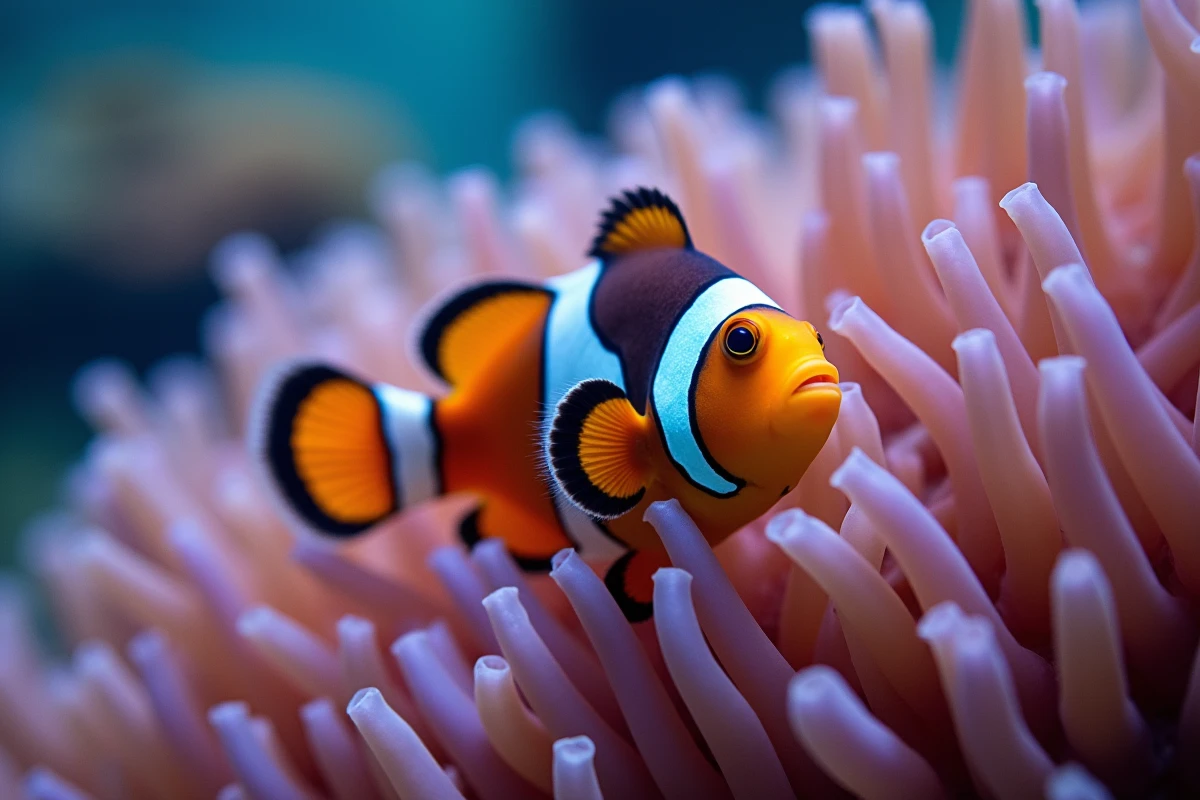
Reef fish provide the most documented case of sexual fluidity in the animal kingdom. In several species of gobies and wrasses, individuals function simultaneously as males and females reproductively. This phenomenon goes beyond classical sequential hermaphroditism, where an individual changes sex only once in its lifetime.
Studies published since 2020 describe bidirectional sexual plasticity: the same fish can alternate between male and female roles depending on the social context of the group. If the dominant male disappears, a female individual takes over, and the reverse also occurs. This ability to navigate between reproductive functions without a definitive transition constitutes a biological parallel to gender fluidity.
For those who wish to explore Starlight Infos on the web, the topic is addressed from a complementary angle linking animal symbolism and non-binary gender identity.
Comparison of non-binary mechanisms observed in animals
Several zoological groups exhibit distinct forms of sexual or behavioral non-binarity. The table below summarizes the main mechanisms and their duration of persistence in the studied populations.
| Animal group | Observed mechanism | Characteristic | Persistence in the population |
|---|---|---|---|
| Gobies and wrasses (reef fish) | Bidirectional sexual plasticity | Alternation male/female depending on social context | Repeatedly observed within groups |
| Some lizards | Multiple sexual morphs | More than two reproductive forms coexist | Stable over hundreds of generations |
| Land snails | Simultaneous hermaphroditism | Each individual possesses both male and female organs | Permanent characteristic of the species |
| Some birds and insects | Gynandromorphism | Half male, half female (physically visible) | Extremely rare, individual cases |
| Primates and social birds | Alternative social roles | Individuals occupying atypical functions for their sex | Recognized by the group without exclusion |
This table highlights a fundamental difference: some mechanisms pertain to reproductive biology (hermaphroditism, plasticity), while others relate to social behavior (alternative roles). The two dimensions rarely overlap within the same species.
Multiple sexual morphs in lizards: a stable non-binarity
In certain species of lizards, evolutionary biology documents the coexistence of more than two distinct reproductive forms within the same population. These morphs are not limited to male and female: intermediate or alternative strategies persist over very long periods.
The remarkable point lies in the stability of this system. These multiple morphs are maintained over hundreds of generations without disappearing, indicating an evolutionary advantage in retaining more than two sexual expressions. This observation challenges the idea that nature would only tolerate two fixed categories.
However, these lizards do not “choose” their morph: it is determined genetically or hormonally. The parallel with human gender identity thus relates more to the diversity of forms than to individual fluidity.
Alternative social roles in primates and birds
The behavioral dimension provides a different perspective. In some primates and social birds, ethologists have documented since the early 2020s individuals who do not conform to the expected sexual roles of their group. Several behaviors have been identified:
- Males providing care for young typically assigned to females, without loss of hierarchical status
- Females adopting courtship or territorial competition behaviors typically associated with males
- Individuals occupying social roles recognized by the group without conforming to the dominant patterns of their biological sex
These individuals are neither excluded nor systematically dominated. The group integrates their difference as a normal component of its social structure. This mechanism of social acceptance without marginalization may be the most direct parallel to the recognition of non-binary identities in human societies.
Gynandromorphism: spectacular but symbolically limited
Gynandromorphism produces individuals that are literally half male, half female, sometimes visible to the naked eye (a red cardinal on one side, brown on the other). This phenomenon has been observed in a small number of insects, crustaceans, snakes, and birds.
Its symbolic impact is strong: the image of an animal split into two distinct sexual expressions captures the imagination. Its limitation as a non-binary symbol lies in its extreme rarity and involuntary nature. Gynandromorphism is a developmental accident, not an adaptive strategy.
It does not convey fluidity or choice, and does not imply any particular social role. As a representational tool, it illustrates intersex conditions more than gender non-binarity in the sense that human communities understand it.
Which animal best represents gender non-binarity
The best symbol depends on what one seeks to represent. For fluidity between gender expressions, gobies and wrasses with bidirectional plasticity offer the most relevant parallel: the same individual navigates between functions without a definitive state. For diversity of forms beyond the binary, lizards with multiple morphs demonstrate that a stable system can integrate more than two categories over the long term.
Primates and social birds provide the behavioral and relational dimension that is lacking in purely reproductive examples. Their symbolic strength lies in the fact that the group recognizes and accepts these alternative roles.
No species combines all these aspects. Animal non-binarity manifests in fragments, each group illustrating a distinct facet. It is precisely this diversity of mechanisms that makes the subject relevant: nature does not offer a single alternative model to the binary, but several, each with its own logic.