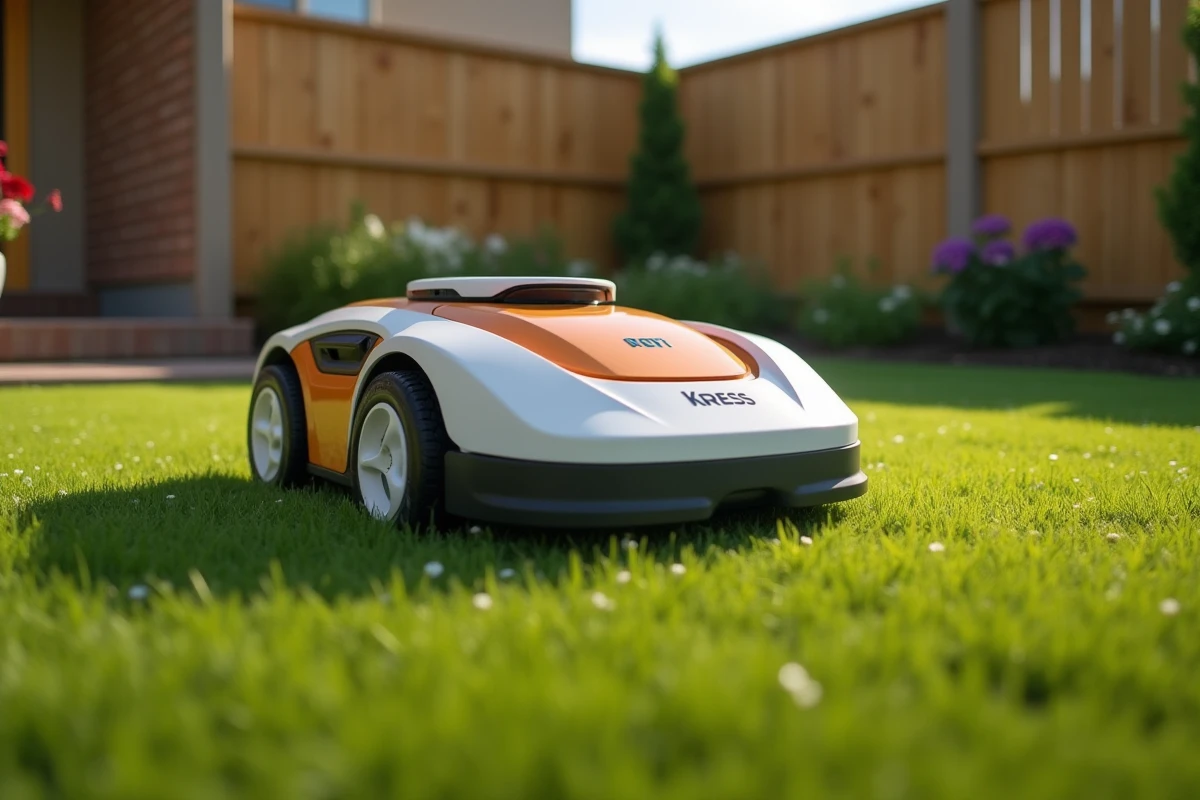
On a plot of 800 m² with three fruit trees and an L-shaped hedge, the Kress RTK robot promises wireless peripheral mowing thanks to centimeter-level GPS positioning. In practice, this precision depends on factors that the product sheet does not always detail. Before finalizing a purchase, it is advisable to understand what is actually happening between the reference station, the Kress network, and the lawn.
Kress Proprietary RTK Network: What Coverage Means for Your Garden
The Kress RTK system does not work with a simple raw GPS signal. It relies on an exclusive network of reference stations operated by Kress, which corrects the robot’s position in real-time to achieve centimeter-level precision. Without good reception of this network, navigation deteriorates.
In practical terms, this means that mowing quality depends on network coverage in your geographical area. If you live in a poorly served area, the robot may lose its precision and exhibit erratic behavior, with missed passes or inconsistent trajectories.
This point is rarely mentioned in product sheets. Before any purchase, it is recommended to consult reviews of the Kress RTK robot that detail field feedback on this subject, and then check directly with a local dealer if the network covers your municipality.
This dependence on a proprietary cloud service warrants consideration. If Kress decides to modify its infrastructure or restrict access, your robot loses its main technical argument. This is a commitment that goes beyond a simple material purchase.
EyePilot and V-SLAM: How the Robot Manages Hidden Areas
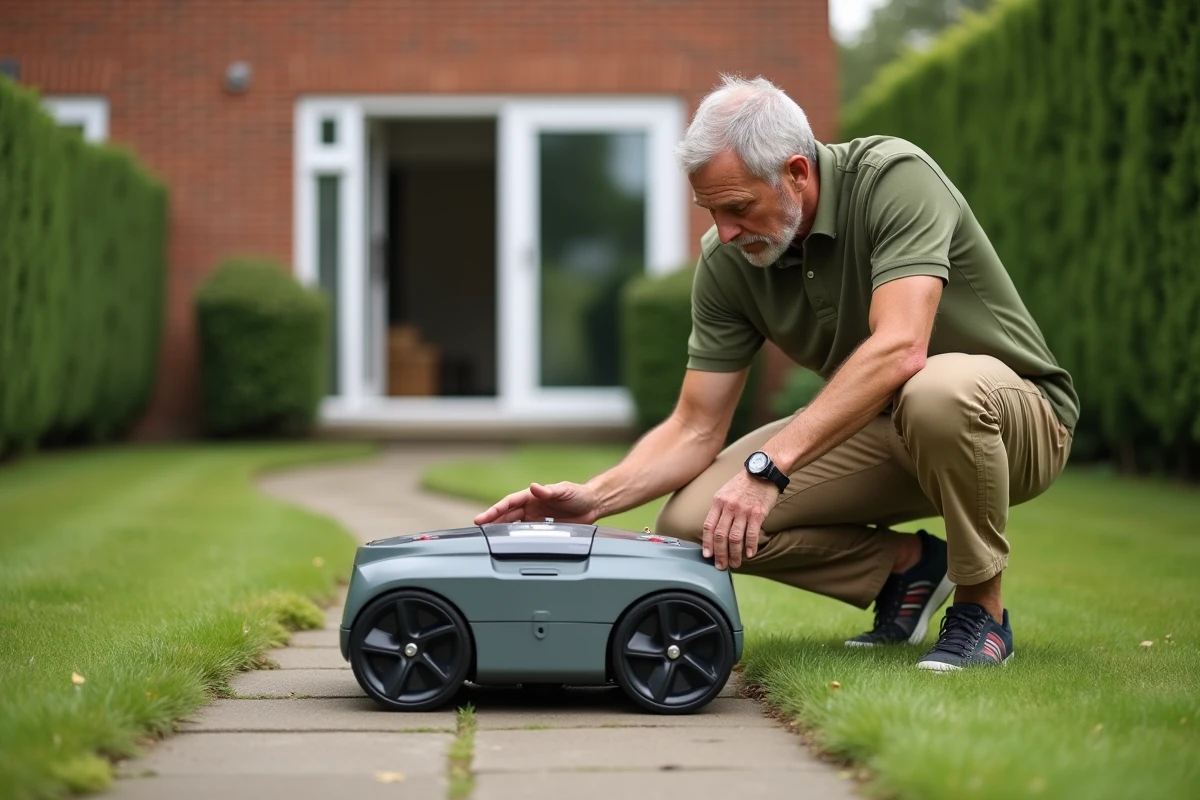
Trees, pergolas, and house facades create areas where the satellite signal is weak. This is the Achilles’ heel of any pure RTK system. Kress has addressed this issue with EyePilot, which combines RTK and V-SLAM artificial vision.
The principle: a mono camera analyzes the robot’s immediate environment and builds a local visual map. When the RTK signal weakens under a dense tree or near a wall, V-SLAM takes over to maintain the trajectory. On models like the KR251E, this technology works without an external fixed antenna to install in the garden.
Feedback on this point varies. Some users report a smooth transition between RTK and vision, while others note hesitations in very shaded areas. Reliability seems to be linked to the complexity of the garden: an open area with a few isolated trees poses fewer problems than a very enclosed garden with tall hedges.
Concrete Limits of the KR251E in Area and Battery Life
The KR251E, a 2WD model without peripheral mowing with EyePilot, remains limited to about 1000 m² with a 4 Ah battery. The battery life is around 60 minutes per cycle, which necessitates frequent mowing, every two to three days, to maintain a proper result.
For a regularly mowed area of 600 m², this is more than sufficient. Beyond 800 m², the limits start to show: the robot spends more time recharging than mowing, and the lawn can get ahead between two cycles during active growth periods.
Slopes and Uneven Terrain: Where the Kress RTK Truly Stands Out
It is on sloped terrain that the Kress range shows a clear advantage. The 4WD models in the range handle elevation changes significantly greater than the typical slopes of 35 to 45% that most competing robots claim.
If your garden features a marked slope or a regular incline towards a low point, this is a determining selection criterion. A classic 2WD robot slips or skids on wet grass as soon as the incline increases. The Kress 4WD models climb without losing their RTK trajectory, which avoids wheel tracks and uncut areas at the bottom of the slope.
Checks Before Installation on Sloped Terrain
- Measure the actual slope with a level or a smartphone app, rather than estimating it visually, as we almost always underestimate the incline
- Ensure that the charging station can be installed on a flat area, as the robot must dock there without difficulty
- Make sure that the Kress RTK network covers the area, as without RTK correction the robot loses its trajectory on slopes
- Plan for a more frequent mowing cycle on slopes, as grass often grows irregularly there
Kress App and Virtual Perimeter: The Pitfalls of Configuration
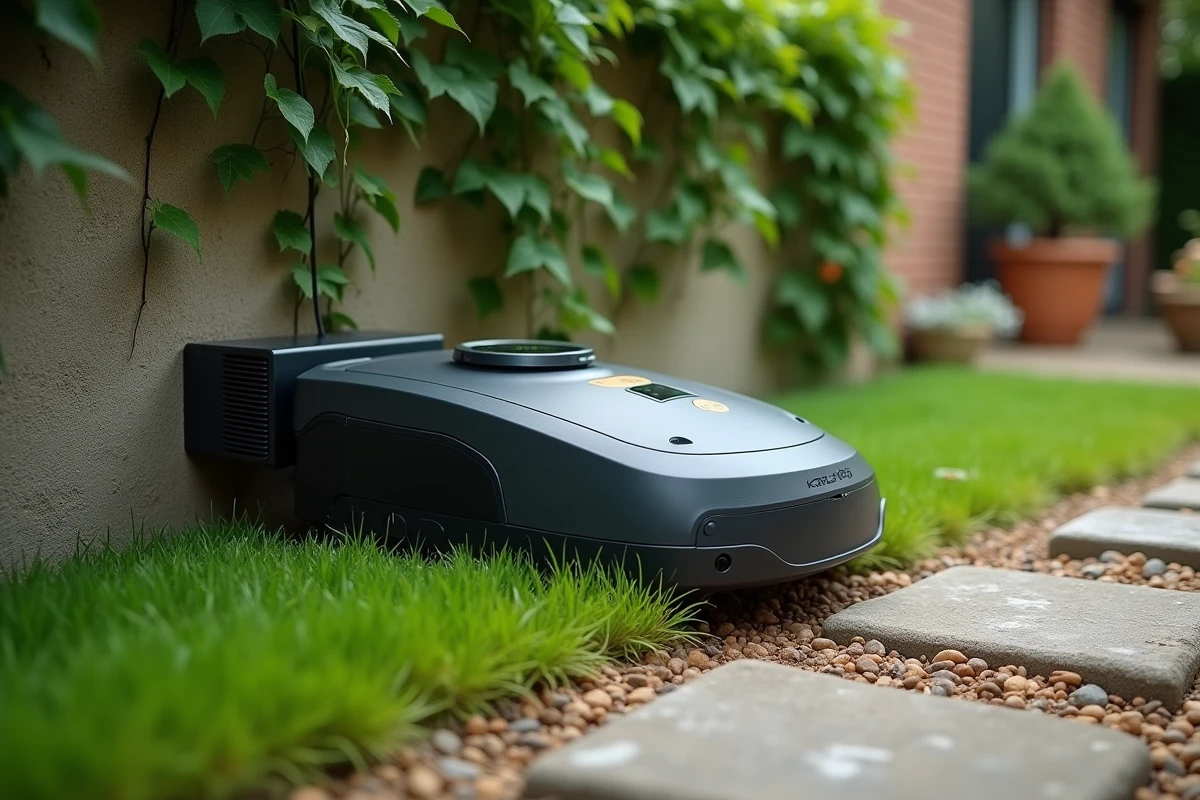
The definition of the mowing perimeter is done via the Kress app, without physical wire to bury. You trace the boundaries of the garden, exclusion zones (flower beds, pool, vegetable garden), and passage corridors from your smartphone.
The initial tracing requires precision. A poorly calibrated perimeter causes overflow onto flower beds or forgotten areas along fences. It is recommended to do the tracing in dry weather, walking slowly along the edges with the phone, and to check the result over two or three cycles before considering the installation complete.
The app also allows you to program priority mowing zones and different schedules depending on the days. This flexibility is appreciated, but it adds complexity. An overly ambitious setup with multiple zones and schedules can disorient the robot, especially in the first few weeks.
Spare Parts and Warranty: Planning for the Long Term
The blades, wheels, and sensors are consumables. Kress distributes its spare parts through its network of dealers, not in large retail stores. Before purchasing, check that there is a point of sale or an authorized repairer nearby.
The availability of parts for a brand still in the deployment phase in France deserves attention. A delivery time of several weeks for a blade or sensor can immobilize the robot in the middle of the season, which is more detrimental than one might think.
The Kress RTK lawn mower robot offers advanced positioning technology, provided that the proprietary network covers your area and that the terrain matches the capabilities of the chosen model. Testing the RTK coverage before signing remains the most cost-effective precaution.